FableRealms
17 empty market square

How to Play DND: A Simple 10-Step Guide for Beginners

A jargon-free introduction to D&D covering players, Dungeon Masters, characters, dice, checks, combat, adventures and the different ways you can gather around a table.

In short

One person becomes the Dungeon Master, everyone else controls a hero, and play moves between description, player choices and dice rolls. Start with the free rules and a short prepared adventure; learn extra rules only when the table actually needs them.

One connected realm

Explore everything FableRealms can do

Discover the full features and capabilities of FableRealms.

Explore the features

What players do, what the Dungeon Master does and how the dice turn “I try this” into a shared adventure.

Dungeons & Dragons is a group conversation with rules. The Dungeon Master describes a situation, the players choose what their characters do, and dice settle uncertain outcomes. That loop can produce one evening’s adventure or a campaign lasting years.

If you searched for how to play DND and found enormous books and dice shaped like minor workplace hazards, don’t panic. You can learn by playing. This guide covers what everybody needs for a first session and the DM’s extra preparation.

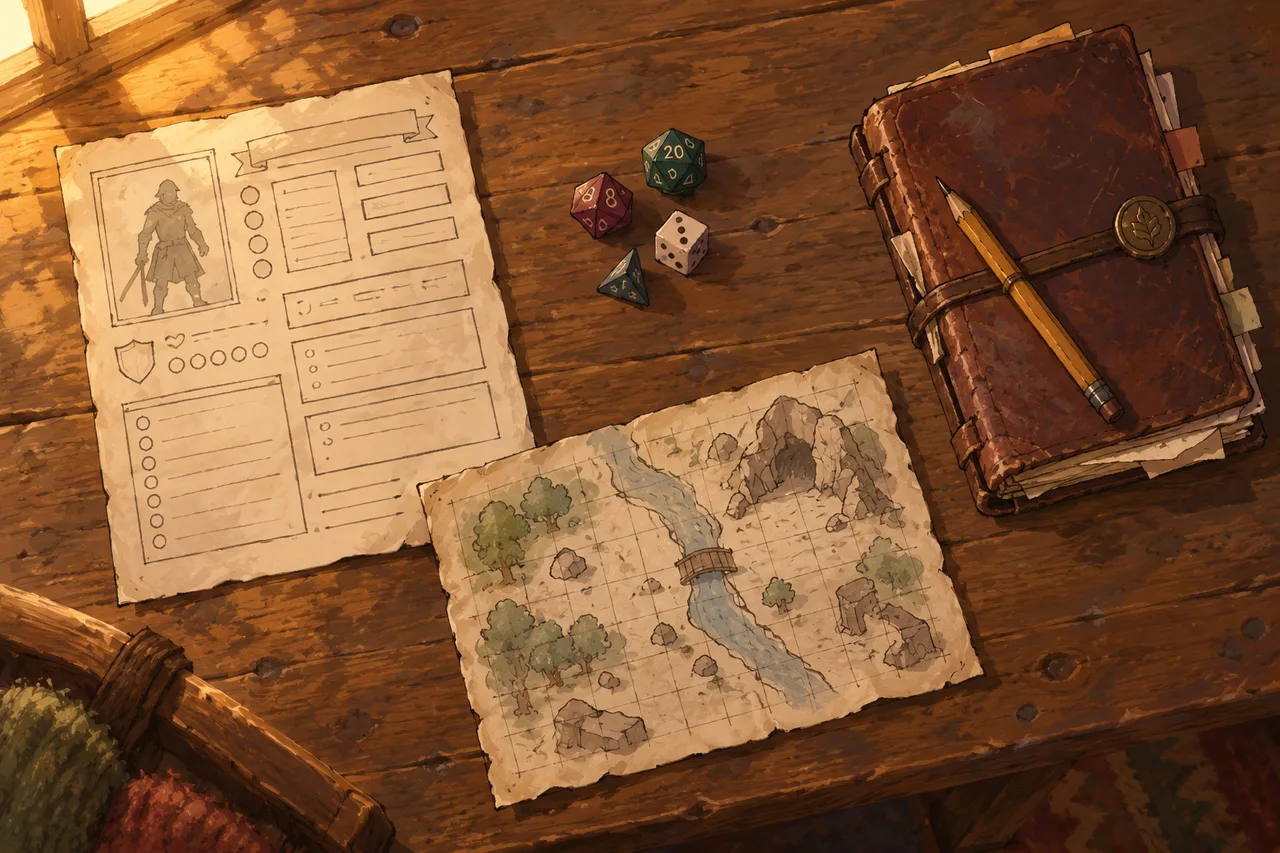
17 beginner gaming table

How to play D&D in 10 steps

Step 1: Decide who will be the DM

Choose one person to present the adventure and make rulings. Everyone else plays a character. The DM has more preparation, so don’t appoint somebody by slowly moving your chairs away from them.

Step 2: Gather a group and choose a date

Invite friends or find people who want a similar game. FableRealms’ Tavern provides profiles for experience, playstyle and content preferences; GuildHall lets players browse campaigns and DMs advertise tables. Agree a date, session length and whether beginners are welcome.

Step 3: Choose a short adventure

Choose a one-shot or short opening adventure. The DM can use a published campaign, adapt prepared material or create a homebrew adventure from scratch.

Homebrew means material made by your group. Begin with one location, one problem, a few people and one danger. Prepare choices, not a novel whose lead actors keep wandering away.

The free Hollow Lantern Inn demo supplies prepared characters, NPCs, locations, monsters and maps inside FableRealms.

Step 4: Get the rules and basic equipment

Begin with the official 2024 D&D Basic Rules, character sheets, pencils and physical or digital dice. The free rules cover players, characters and DM basics.

The Player’s Handbook adds character options, equipment and spells. The Dungeon Master’s Guide expands session and homebrew advice. A Monster Manual helps when building encounters, although prepared adventures may include the required creature statistics.

Step 5: Create—or borrow—a character

A character sheet records who your hero is and what they can do. Choose a class, background, species, abilities and equipment. For the quickest start, use a pre-generated character and change its name and personality. Nobody loses points for starting with the buttons attached.

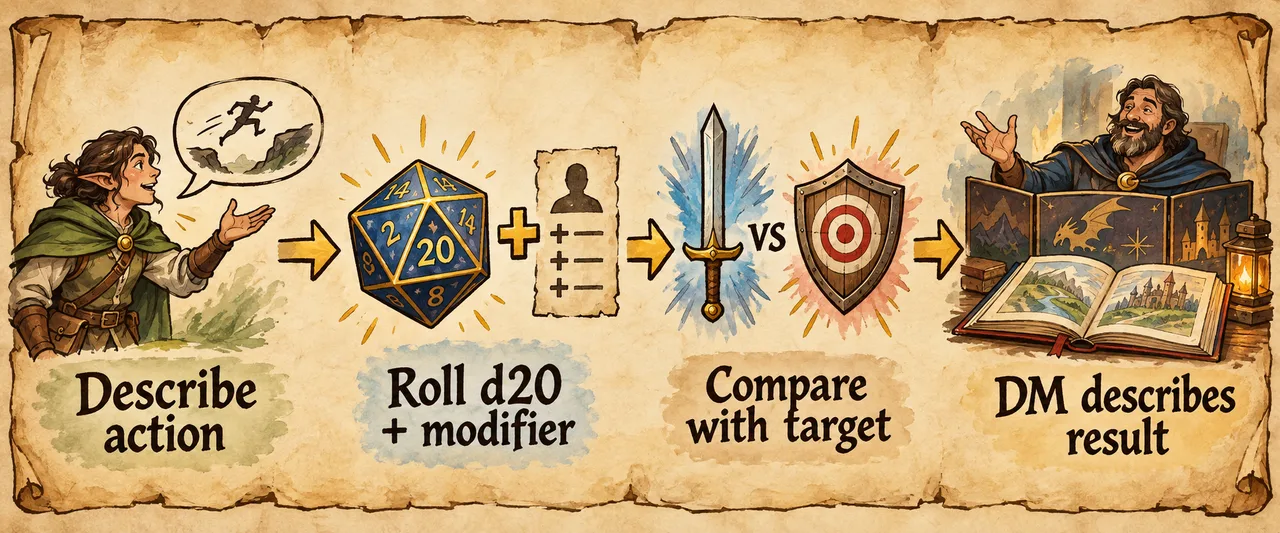
18 basic d20 roll diagram

The one dice rule that explains most of D&D

Roll a twenty-sided die, add the relevant number and compare the total with a target.

Step 6: Learn the basic play loop

The DM describes the situation. Players say what they do. Obvious actions simply happen; uncertain actions with meaningful failure may require a roll. The DM describes the result, and the loop begins again.

Step 7: Learn checks and d20 rolls

For an ability check, roll a d20, add the relevant ability modifier and add proficiency when applicable. Meet or beat the DM’s Difficulty Class to succeed.

Climbing might use Strength, spotting a hidden door Wisdom and persuading a guard Charisma. With advantage, roll two d20s and keep the higher; with disadvantage, keep the lower.

Other dice usually determine quantities. “2d4 + 3” means roll two four-sided dice, total them and add three.

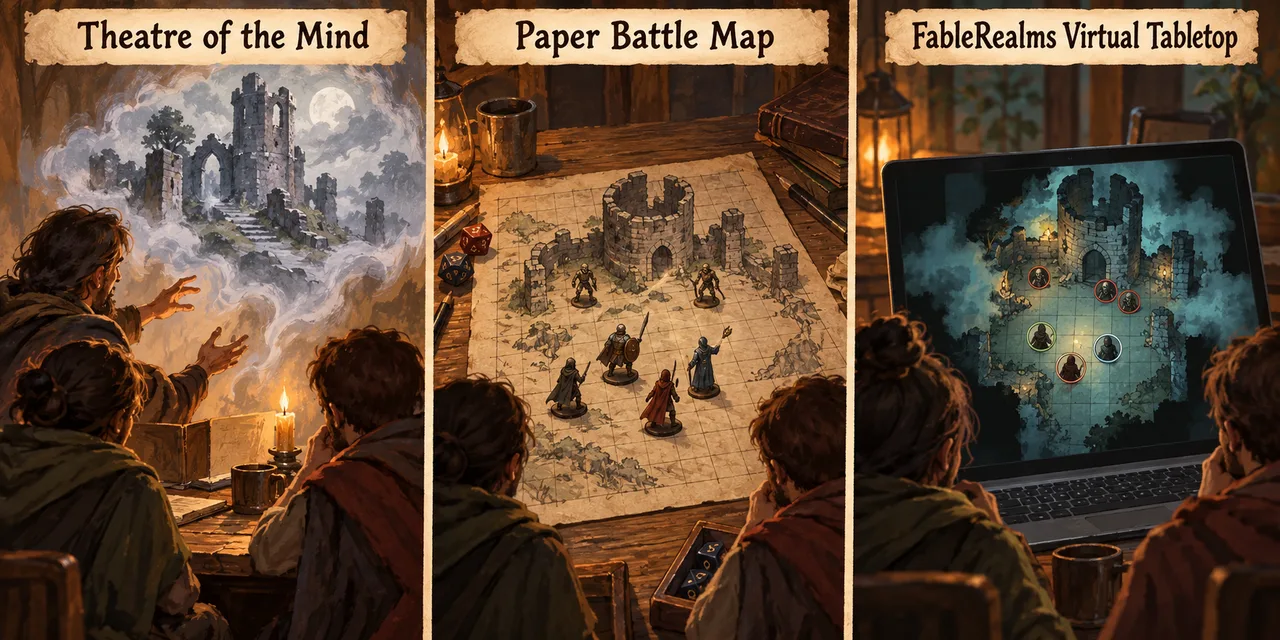
19 tabletop play styles comparison

Step 9: Pick theatre of the mind, a physical map or a virtual table

You can play through spoken description—theatre of the mind—on a paper map with tokens, or through a virtual tabletop showing maps and encounters online or around a screen.

FableRealms supports the digital route through WorldBuilder and Table. A DM can prepare maps, walls, doors, lighting, fog and tokens, then run exploration, rolls and encounters. The software presents the scene; players decide what happens.

Use the lightest setup that keeps play clear. A conversation rarely needs a grid. Twelve goblins, three balconies and a suspicious vat of soup probably do.


Step 10: Play one short session and review it

The DM should understand the opening, immediate problem, important characters and a few likely scenes. Describe enough for the group to act and make a reasonable ruling when a rule isn’t obvious. Look it up afterwards rather than holding the table hostage to an index.

End with a recap of what changed and whether the group wants another session. If so, arrange the date before real life remembers where you live.

FableRealms can give the campaign a continuing home across Tavern, StoryEngine, WorldBuilder, Table, Codex and The Chronicle. Use only the pieces your group needs.

Frequently asked questions

Do I need to buy books before playing D&D?

No. The official 2024 Basic Rules are enough to begin. The Player’s Handbook expands player options; the Dungeon Master’s Guide helps with running games and homebrew.

How many people do I need?

You need one DM and at least one player. Three to five players often provides variety without making turns too slow, but start with whoever is genuinely available.

Do I need a map and miniatures?

No. Play through description, a rough paper map or a virtual tabletop. Maps help when exact positions and distances matter, especially during complicated battles.

Does the DM need to know every rule?

No. The DM needs enough understanding to keep play moving fairly. For an obscure question, make a temporary ruling and check the rule after the session.

Is FableRealms required to play D&D?

No. FableRealms is an optional campaign and play platform, not the D&D rules. It helps with people, characters, campaigns, maps, live play, discoveries and outcomes.

Can I try a prepared adventure for free?

Yes. The Hollow Lantern Inn is a free campaign starter with prepared characters, NPCs, locations, monsters and maps. It uses dark-horror themes, so check that it suits your group.

You don’t need a continent, three pantheons and the trading history of dwarven turnips. You need characters, an immediate problem and somebody willing to ask, “What do you do?”

Read the free rules, gather a few people and choose a short adventure. If you’d like a prepared campaign to examine or run, explore The Hollow Lantern Inn demo and use it as your first look at how preparation becomes play.

Join The Realm