
In short
FableRealms brings your party’s availability, session confirmations, messages and reminders together in Tavern, with Scheduler available free to players and DMs. Agree the date, nudge the inevitable non-responder and give everyone fewer excuses for missing the next game.
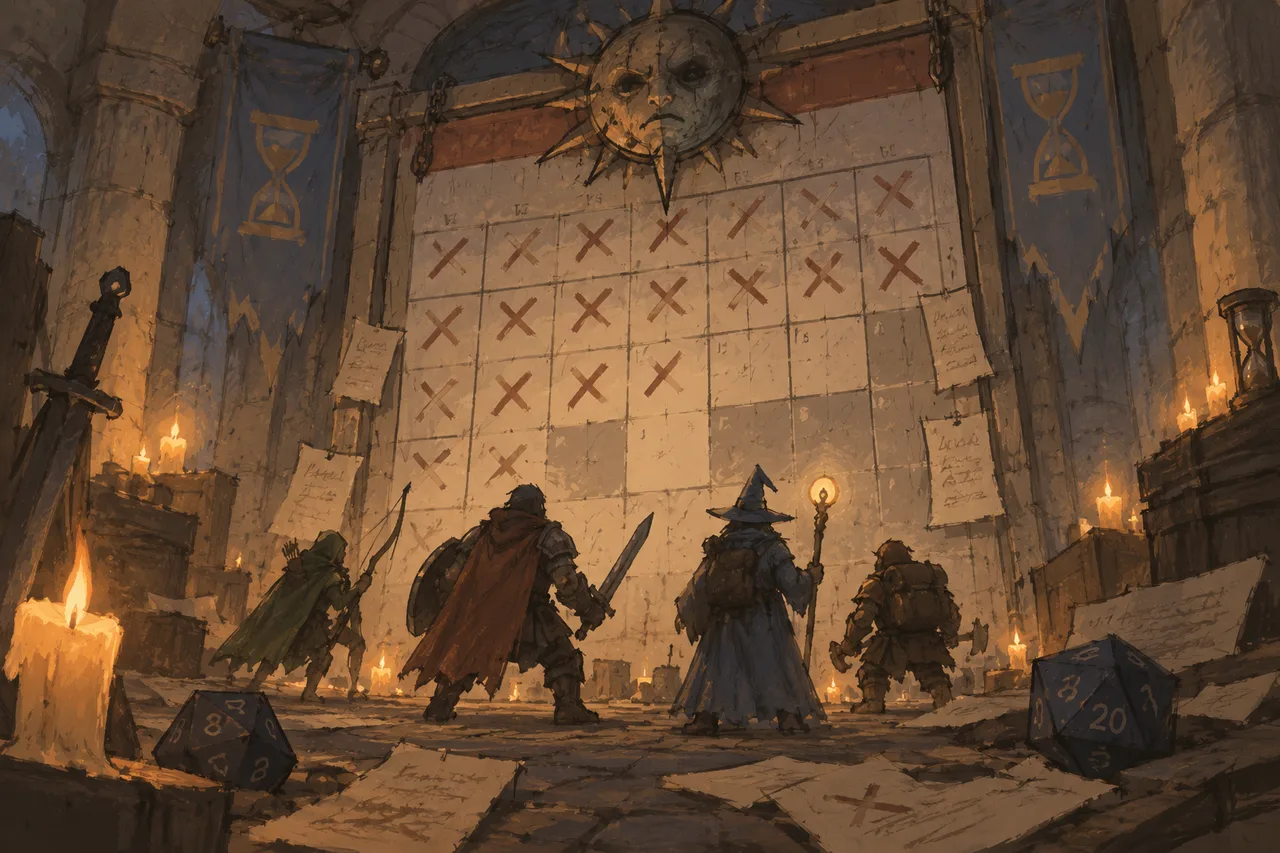
The campaign is ready. The villain has a motive, the dungeon has been mapped and the suspicious innkeeper has three increasingly unconvincing accents. There is only one obstacle left: finding out whether your players are actually coming.
D&D scheduling is the true final boss of tabletop roleplaying. It cannot be stunned, it ignores difficult terrain and it grows stronger every time somebody says, “I should be free that weekend.”
FableRealms cannot cancel a dental appointment or negotiate with somebody’s shift rota. What Tavern can do is give your group one place to propose dates, share availability, confirm the next session, send party messages and remind everyone that the game they agreed to attend is, astonishingly, still happening.
The campaign where everybody is “probably free”
Most groups do not struggle because nobody wants to play. They struggle because the plan is scattered across half-read messages, vague verbal agreements and a poll that two people answered before apparently leaving society.
The DM asks for dates. One player replies immediately. Another reacts with a thumbs-up, which could mean “yes”, “I have seen this” or “please stop contacting me”. Somebody answers a different question entirely. The final player remains silent until the chosen evening, when they announce that Thursdays have never worked for them.
Real life will always win occasionally. People get ill, children refuse sleep, work runs late and family comes first. The useful goal is not perfect attendance. It is a clear routine that separates genuine last-minute problems from the much more common problem of nobody quite knowing what was agreed.
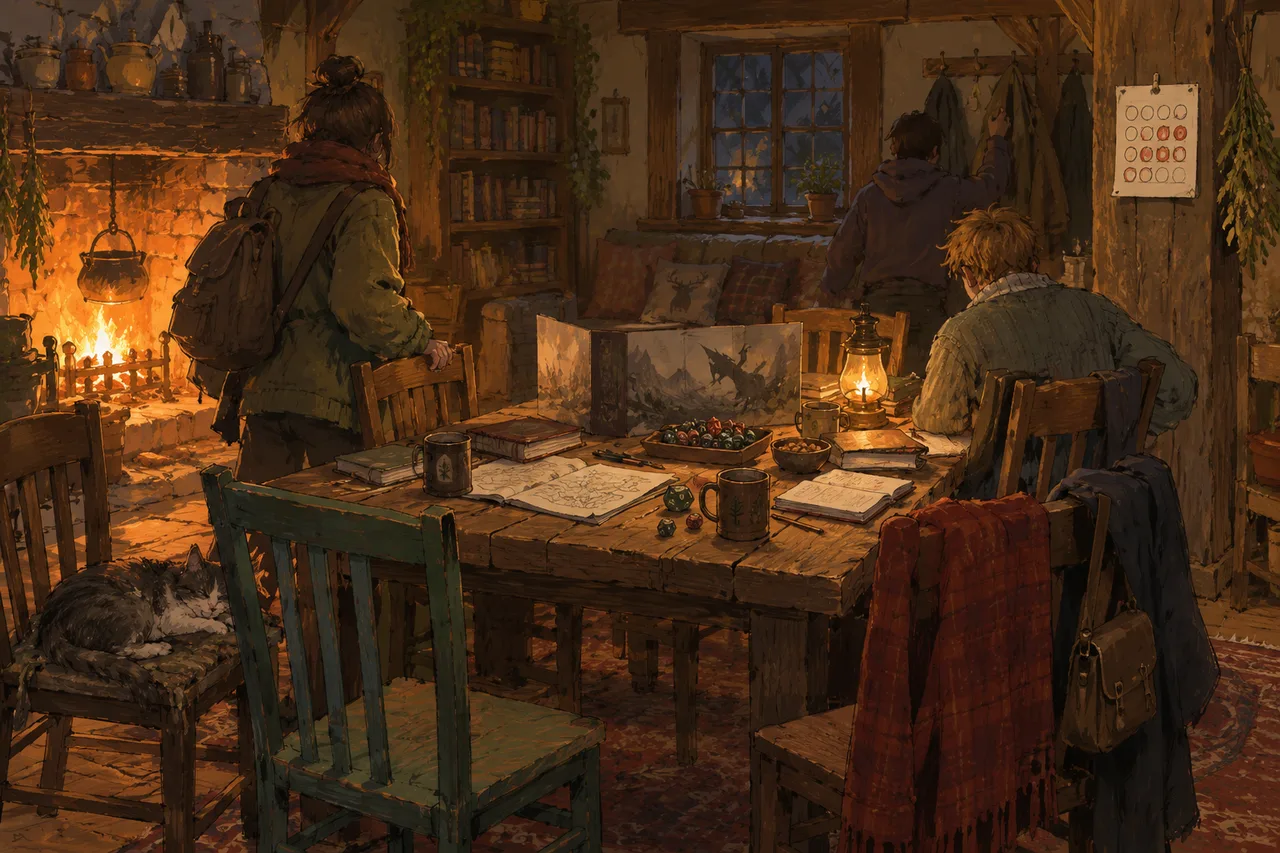
A group that plays every second Sunday is sitting on treasure. Do not inspect it for curses. Do not loan it to a mysterious merchant. Hold on to it for dear life.
Cadence works because it removes a decision. “We play fortnightly” is easier than reopening negotiations after every session. Your next date should be agreed before everybody leaves the current game, even if it still needs confirming later.
It also helps to decide your absence rule in advance. Will you play with one person missing? Does the answer change during a character-focused session? Can somebody else control the absent character? Is there a backup one-shot? Reddit groups describe everything from cancelling for one absence to playing as long as three people arrive. There is no universal rule, but there should be your rule.
Media suggestion: A warm recurring game night in a cottage: the same chairs, campaign books and dice ready around a table, with a small recurring-date card pinned nearby.
Put the whole party plan in Tavern
The Tavern Scheduler gives linked players and DMs a shared place to plan the next session. The DM proposes dates, players add their availability and the group can see confirmations and the current session status without reconstructing a plan from several conversations.
Tavern also keeps party messages beside the campaign. That matters because a session date is not an isolated appointment. It belongs to a particular group, campaign and roster of players. When somebody checks the campaign, the plan is there too.
The Scheduler is included for players and DMs on FableRealms’ free Adventurer and Storyteller plans. Current tools allows for confirms proposed dates, availability, confirmations, session updates, party messaging and Discord, browser and PWA notifications where available. Tavern Toolset is always growing and open to more features so please reach out if you have an idea
The result is not a magical guarantee that everybody attends. It is a single, visible answer to three useful questions: when are we playing, who has confirmed and has anything changed?

A simple scheduling routine that actually survives contact with players
Try this at the end of your next session:
Propose the next dates while everybody is present. Do not trust six adults to rediscover urgency tomorrow.
Ask each linked player to record availability in Tavern. A reaction to a message is not availability. It is a tiny picture of a thumb.
Confirm the chosen session. Make the date official so nobody is working from a stale suggestion.
Keep changes in the campaign conversation. If the start time moves, update the party in Tavern rather than releasing the news across several channels like a low-budget town crier.
Agree what happens when somebody is absent. Continue, postpone or run something else—but decide before the crisis.
The exact routine matters less than consistency. Players should know where to look and what “confirmed” means.
Then deploy the Nudge
Some players respond to a polite message. Some respond to a reminder. One particular player has ignored both, despite being visibly active elsewhere for the last four hours.
For that player, Tavern includes the much-missed, MSN-style Nudge: a direct ping for the person who has not responded. It is not a substitute for basic communication, and repeated use may result in your character being placed suspiciously close to the next trap. Used responsibly, however, it answers the ancient DM question: “How do I make Dave look at the schedule?”
Once a session is confirmed, Tavern can also message the party through its mobile experience and issue reminders one day, six hours and one hour before play when notifications are enabled. The reminders do not remove every excuse. They do retire “I forgot” with full military honours.
Frequently asked questions
Is the FableRealms Scheduler free?
Yes. Scheduler is currently included in both the free Adventurer player plan and the free Storyteller DM plan. A Storyteller can run one campaign, while players can join campaigns and use Tavern’s scheduling features.
Do players need to be linked to the campaign?
Yes. The shared workflow is built around a campaign and its linked party. Once players are connected through Tavern, they can see proposed dates, add their availability and follow the confirmed session status.
What notifications does Tavern support?
Discord, browser, Email and PWA (Android app) notifications where available. The Scheduler workflow also uses reminders one day, six hours and one hour before the session when the relevant notifications are enabled.
What does the Nudge do?
udge directly pings a player who has not responded to the schedule. It is designed as an old-school attention grabber, not a licence to bombard the party. One nudge is helpful; seventeen nudges may become the reason the cleric stops preparing healing spells for you.
Should we cancel if one player cannot attend?
That is a group decision, but agree the rule before it happens. Some campaigns continue with one absent player; others postpone character-critical sessions. Recording a default policy during your group setup prevents every absence becoming a fresh constitutional debate.
Stop asking. Start confirming.
You cannot defeat adult life, but you can stop making your next session fight through scattered messages, unanswered questions and dates that were never properly confirmed.
If your party already has a dependable rhythm, cherish those magnificent creatures. If it does not, give everybody one place to choose, confirm and remember the next game.
Create a free FableRealms account and schedule the session before the calendar rolls initiative again.